

Oshwal Centre Masterplan – Community-Led Masterplanning
The Oshwal Centre Masterplan is a large-scale mixed use community development designed by Saloria-Architects for the Oshwal Association of the UK. Conceived as a long-term, phased masterplan on Green Belt land adjacent to the Oshwal Temple, the project brings together residential, religious, community, and self-sustaining facilities within a carefully considered, landscape-led framework. Since the initial proposal was first submitted in 2012, the scheme has evolved into a coherent and sustainable masterplan that places community, environmental sensitivity, and planning compliance at its core.
Project Overview
Forecast total contract cost: £27,500,000.00
Site area by Phase:
- Phase 1: 3,595.00 m2;
- Phase 2: 3860.00 m2;
- Phase 3: 3075.00 m2;
- Phase 4: 3845.00 m2;
- Phase 5: 2230.00 m2;
- Phase 6: 3075.00 m2;
- Phase 7: 730.00 m2
Proposed total residential G.I.A.: 10,200.00m2
Client Brief and Planning Context
Originally designated as Green Belt land, the site required a sensitive and strategic materplanning approach. During the early consultation stages, the local authority set out several key planning objectives:
- To avoid greenbelt scrawl
- To clearly define and separate community and centre uses
- To reduce the environmental and visual impact of carparking
Saloria Architects responded with a planning-let masterplan that integrates built form, landscape, and circulation in a way that respects both policy constraints and the long-term needs of the community.
Masterplanning Strategy and Zoning
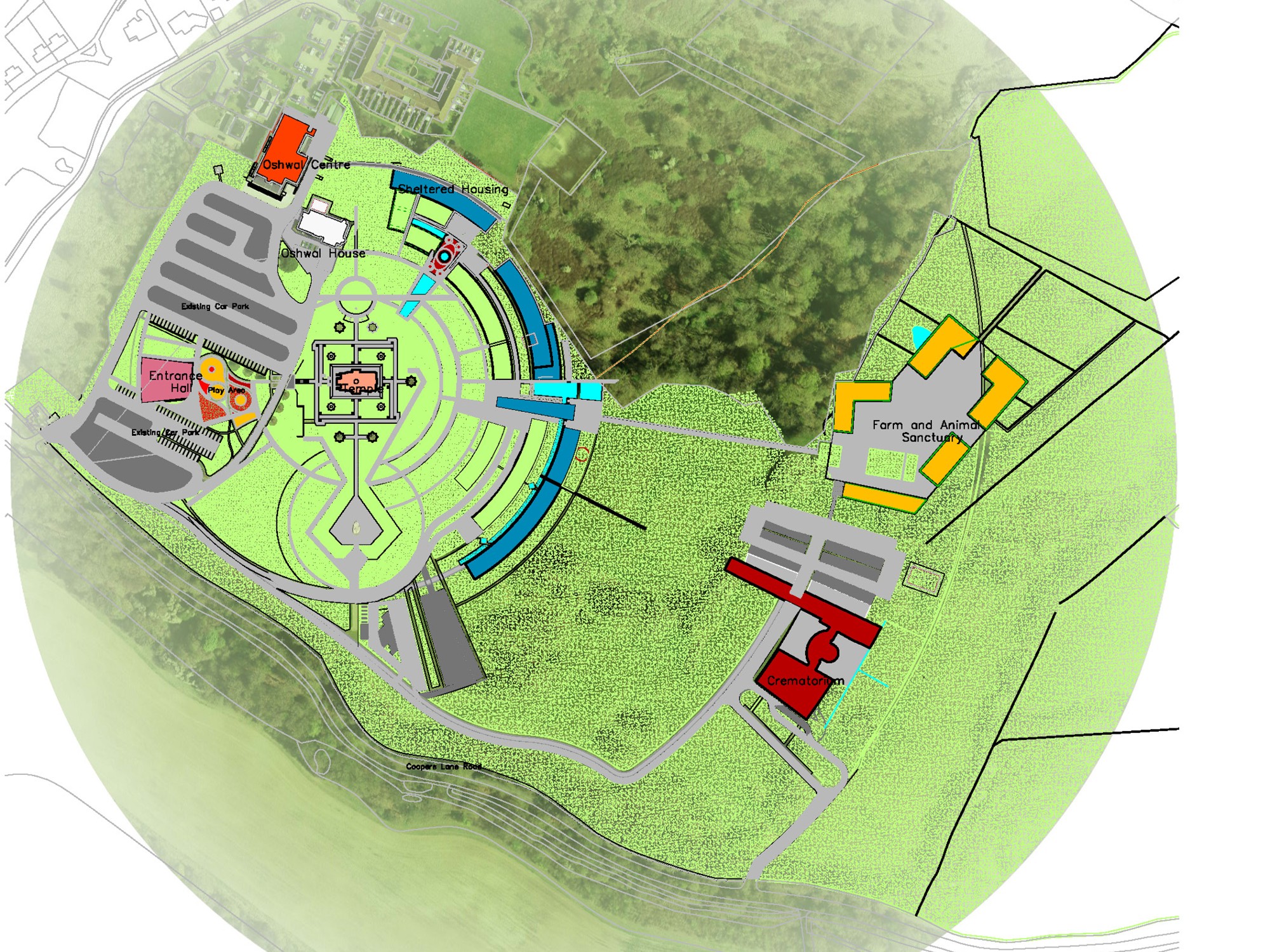
The masterplan organises the development into three distinct yet complementary zones, ensuring clarity of use while maintaining a strong sense of place:
- Broader community use: open to Potters Bar and the surrounding area
- Playground area
- Multi-functional area
- Selected groups of users:
- Residential homes for the retired,
- Community facilities
- Self-sufficient businesses:
- Crematorium,
- Animal sanctuary
Key facilities such as the crematorium and animal sanctuary were deliberately relocated away from the core community and residential areas. This zoning strategy allows the multi-functional centre, nursing home, and orangery to operate harmoniously while maintaining privacy, dignity and ease of access.
Phased Development Approach
The Oshwal Centre Masterplan is delivered across seven carefully planned phases, allowing the development to evolve organically over time while remaining operational and adaptable:
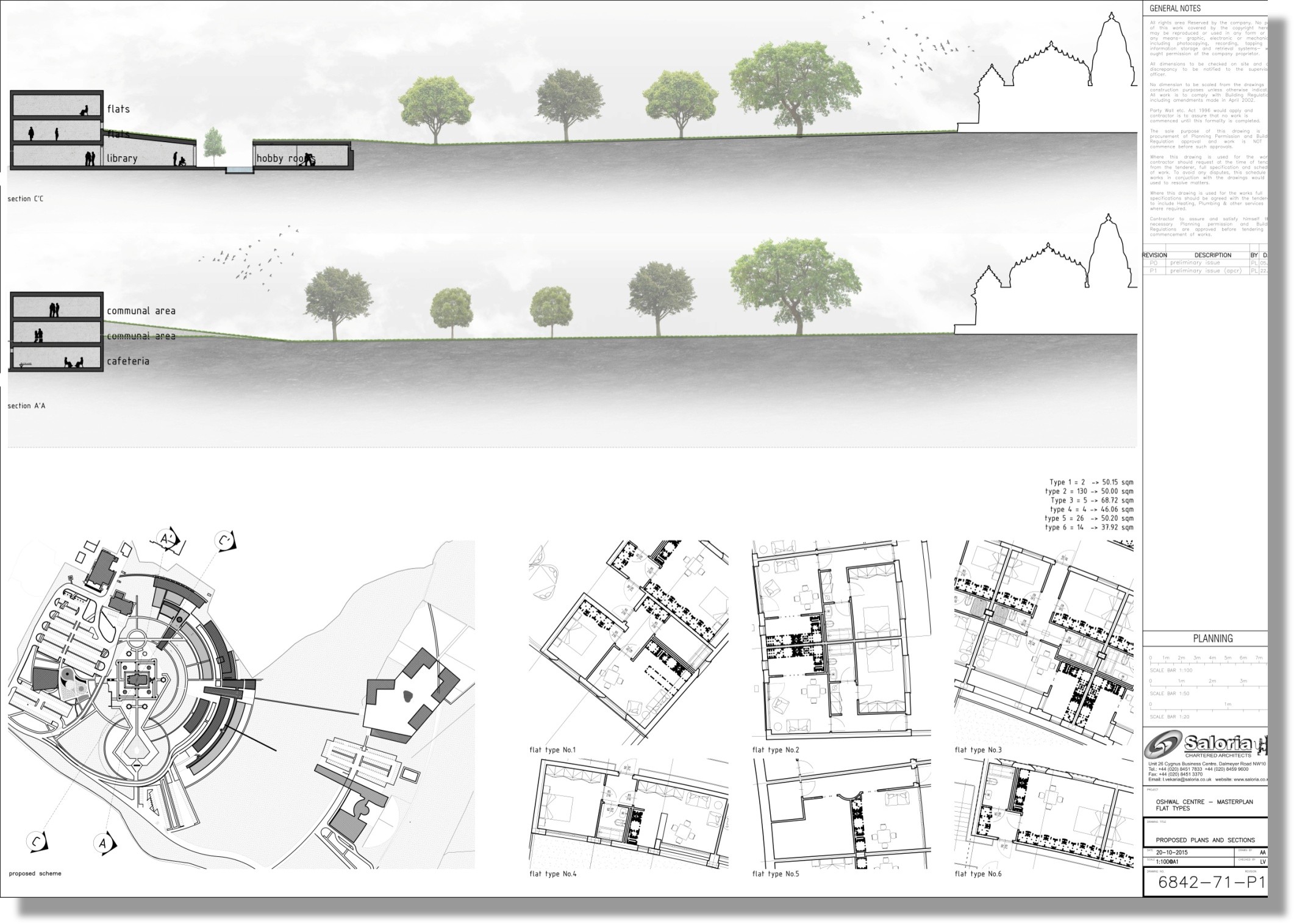
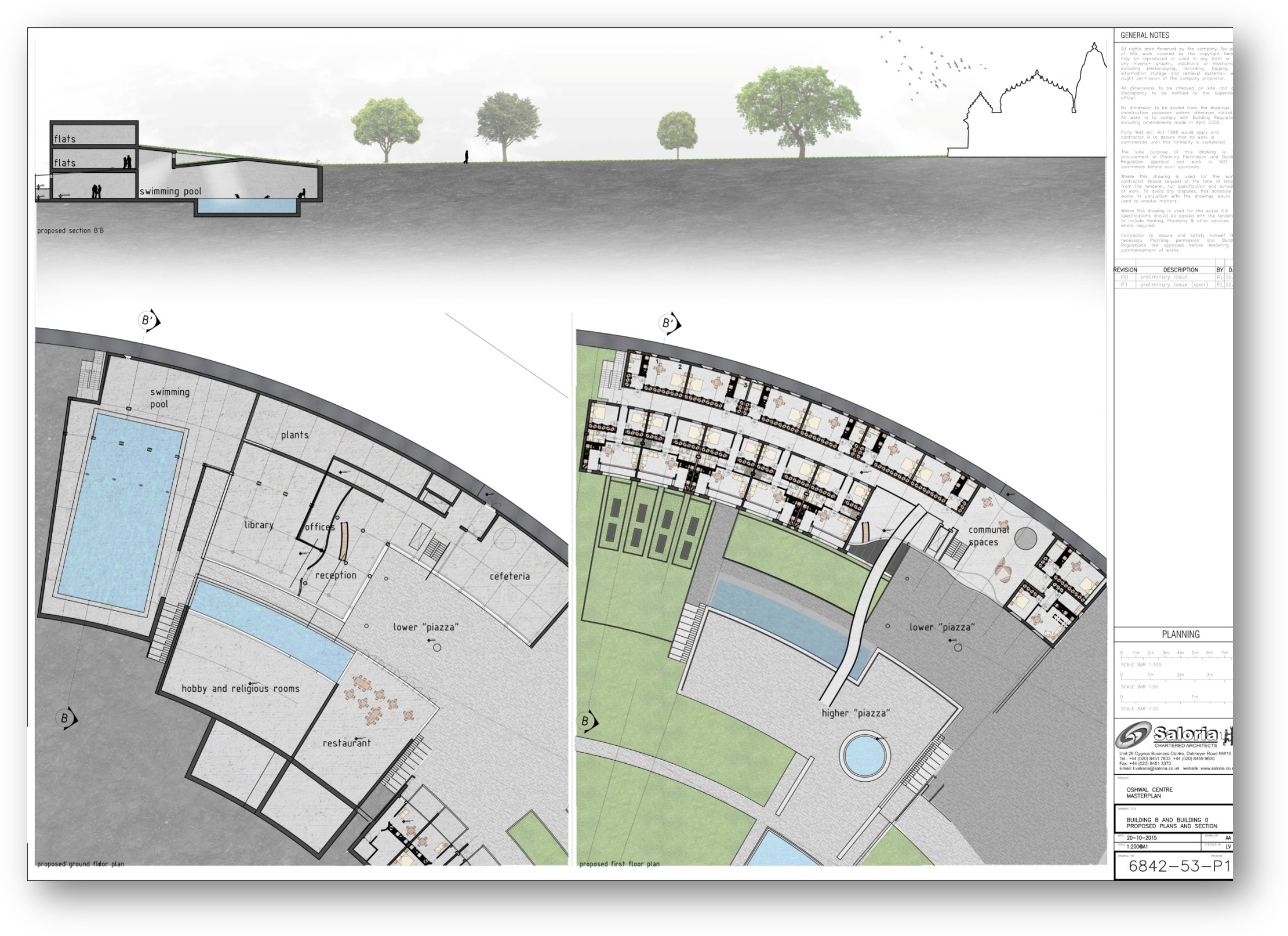
- Phase 1: Initial residential block incorporating shared facilities including a swimming pool, library, main reception, cafeteria, communal spaces, hoppy rooms, religious school rooms and a restaurant.
- Phases 2 – 4: Completion of additional residential blocks
- Phase 5: Construction of crematorium
- Phase 6: Development of the animal sanctuary
- Phase 7: Delivery of the multi-functional community centre, completing the masterplan.
The phased master planning approach supports long-term viability, funding flexibility, and minimal disruption to the surrounding area.
Sustainable Design and Landscape Integration
A strong emphasis was placed on sustainable architecture and landscape-led design throughout the masterplan. Car parking was divided into two smaller zones to reduce land take and visual dominance, with tree planting introduced around the perimeters to provide screening, enhance biodiversity and contribute to carbon offsetting.
The integration of the Temple gardens into the winder development ensures that landscaped spaces function as meaningful community assets rather than residual areas, reinforcing the project’s environmental and social sustainability credentials.
Residential and community facilities – Architectural Concept
- There are two main features that Saloria has considered:
- The existing Oshwal House, which is a Georgian/Tuscan styled villa,
- The Oshwal Temple (see our Study Case ).
- The main idea was that the Temple should be the visual hub of the whole development. Whilst the Oshwal House would be at the heart of the subsequent circular development.
- At the centre, therefore, there are the community facilities including the existing Oshwal Hall, the Oshwal House and the proposed library, swimming pool, hobby rooms, meeting halls
- On the lefthand side, near the main entrance, there is the Welcome Centre, including gym and playground. The proximity of it to the main car park presents this as an interconnecting point between the Oshwal Community and the lager Potters Bar community. This to open the Oshwal Centre up to a larger public/use.
- On the righthand side of the “hub/Temple” is all the residential development.
- The site is on multiple levels. Saloria’s masterplan for the site takes these into account so that the finished development has an open feel that sits comfortably in landscape. The green roofs help to merge the residential development with the existing landscape creating a sense of openness.
Animal Sanctuary – Architectural Concept
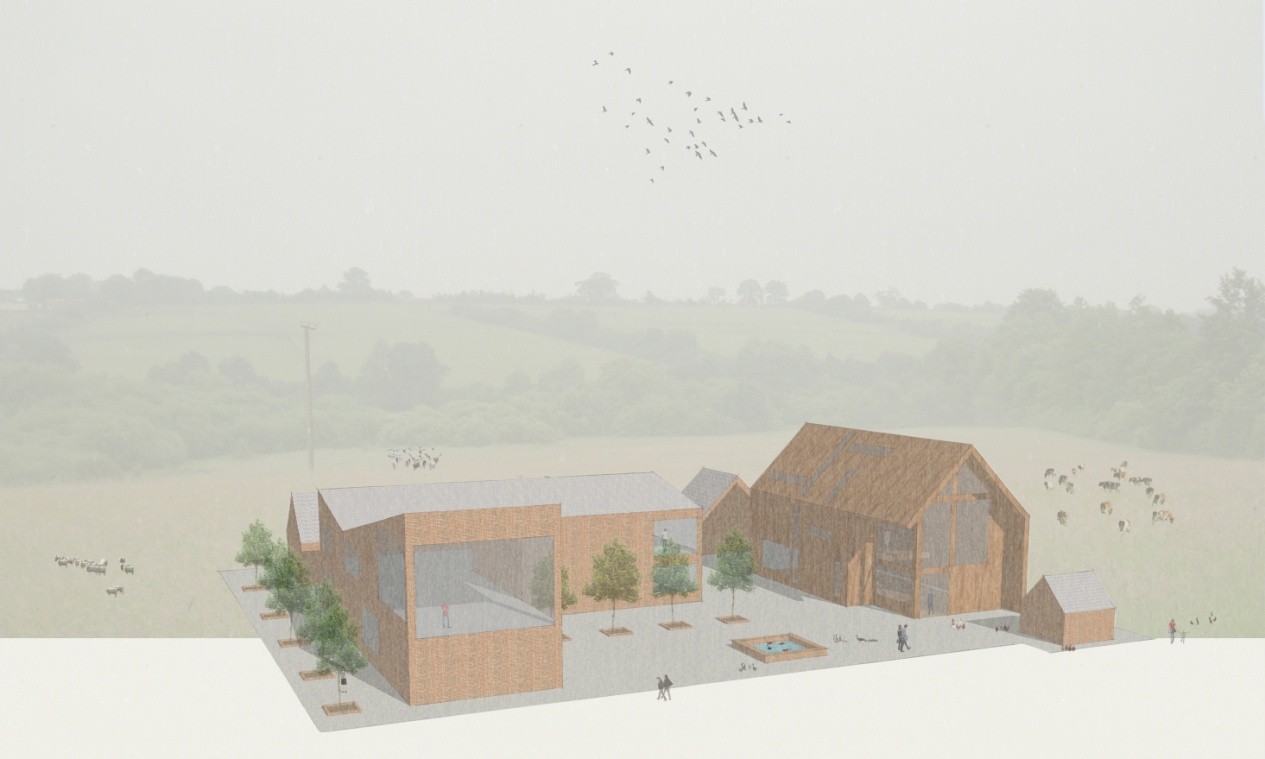
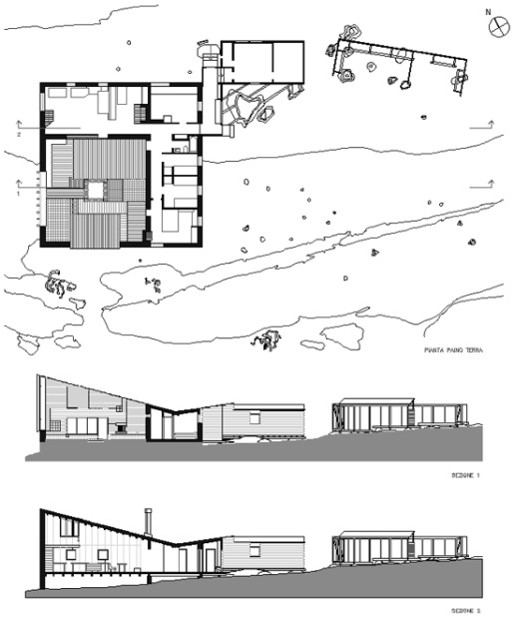
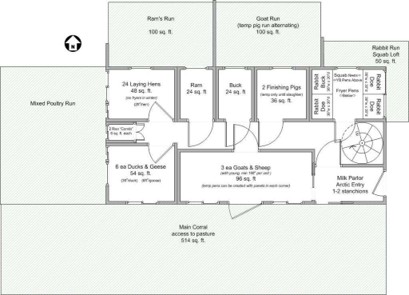
A defining feature of the masterplan, the animal sanctuary has been carefully designed as both an educational and community resource. A collection of buildings arranged around a series of piazzas creates a clear spatial hierarchy while encouraging interaction and movement.
Architecturally, the sanctuary combines vernacular influences with contemporary materials, using glass and modern detailing to reinterpret the Northern European farmhouse style. The result is a welcoming, functional environment that balances tradition with modernity.
Housing eight different animal types, the sanctuary provides opportunities for schools, hobby groups, and the winder community to engage in hands-on learning, promoting empathy, education and awareness of sustainable farming practices.
Community Impact and Social Value
Multi-use, community-focused developments such as the Oshwal Centre Masterplan play a vital role in strengthening communities. By integrating residential living, education, religious use, and self-sustaining facilities within a single masterplanned environment, the project supports intergenerational interaction, learning and long-term community resilience.
At Saloria Architects, we specialise in architectural masterplanning and complex mixed-use developments, helping clients unlock the full potential of challenging sites through thoughtful, planning-conscious design.
Project Credits
Client: Oshwal Association of the UK
Architect: Saloria Architects Ltd
Planning Consultants: DLP consultants (Neil Osborn)
Date:
February 11, 2026